

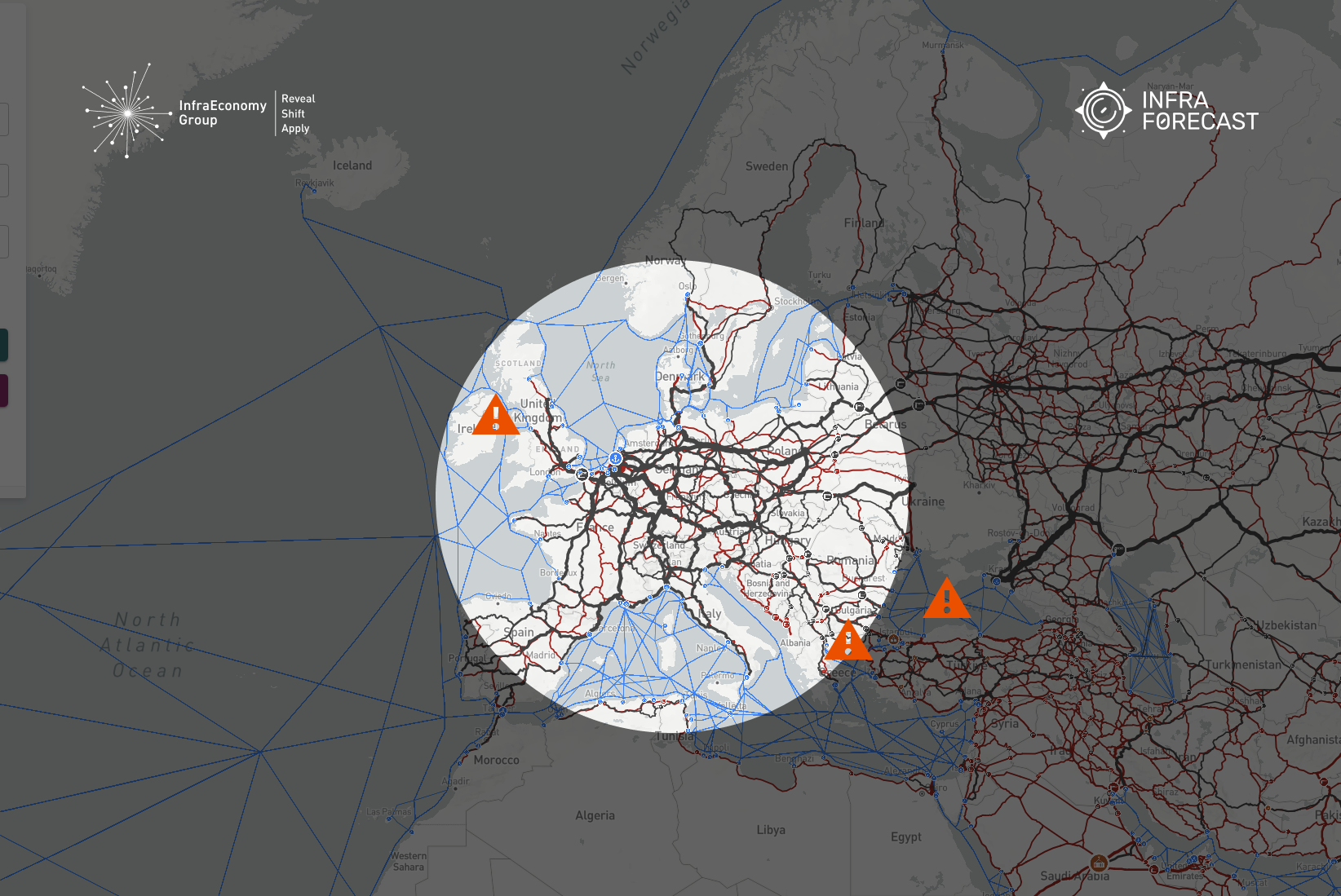
🇬🇧 🇮🇪 Storm Bram moved across Britain and Ireland on 8–9 December, 2025, bringing severe winds and heavy rain that forced ferry operators to cancel services on Irish Sea and North Sea routes. Short-sea movements near Liverpool (~0.9m TEU) and Belfast (~350k TEU) were intermittently affected as sea conditions deteriorated. Deep-sea terminals remained operational throughout, and disruptions were contained within coastal services.
🇷🇺 From late November into early December, a combination of drone attacks and storms disrupted crude-loading operations at Russia’s Black Sea export hubs, particularly Novorossiysk. Damage from a mid-November drone strike, followed by adverse weather, contributed to a shortfall of roughly 1m tonnes in November exports, with several Suezmax cargoes rolling into December.
🇬🇷 🇲🇰 🇧🇬 On 8 December, 2025, farmers protesting delayed subsidies blocked highways, border crossings and access routes toward Thessaloniki (~450k TEU). Truck flows into North Macedonia and Bulgaria experienced delays until the blockades were lifted later the same day. The disruption remained localised and short-lived.
🇯🇵 On 9 December, 2025, a strong offshore earthquake triggered tsunami warnings along Japan’s Pacific coast. Authorities temporarily paused coastal transport and conducted safety checks at major gateways including Yokohama (~3.2m TEU)and Sendai-Shiogama (~200k TEU). Operations resumed once warnings were lifted, and early assessments indicate no confirmed impacts on cargo handling.
InfraDisruption – InfraEconomy’s recurring insight series examining major transport disruptions and their impact on global logistics networks. Building on these insights, InfraEconomy offers a range of high value-added services from emergency re-routing to long-term contingency strategies. Join our client network.