


Protests in Iran began in late December 2025 following a sharp currency depreciation and expanded nationwide in early January 2026. Demonstrations were reported across a broad range of cities, including Tehran, Qom, Mashhad, Yazd, Isfahan and others, reflecting the scale of the country-wide unrest. The protests were primarily political and economic in nature, though in some locations they coincided with temporary strikes by merchants and transport workers (merchants and truck drivers strike in Isfahan being the most notable).
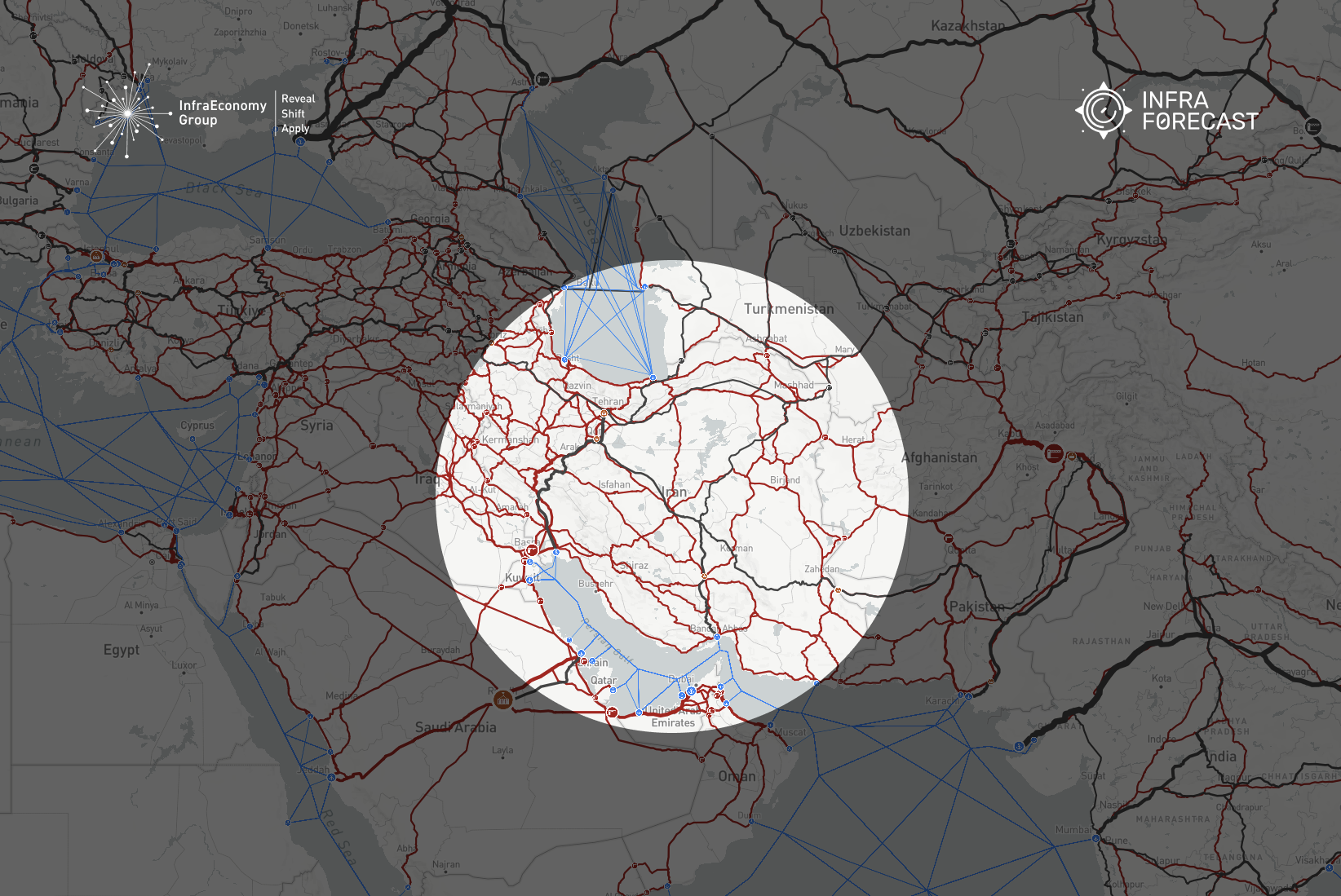
While Iran’s own international trade remains limited due to sanctions, the unrest matters because of Iran’s role as a transit country for north–south overland routes linking Central Asia with ports on the Persian Gulf. These corridors run through northern and central Iran toward Bandar Abbas and adjacent gateways. There were no confirmed formal closures of the corridors, ports, or the Strait of Hormuz. However, protests, security deployments, localized transport disruptions, and a complete internet shutdown reduced operational predictability and increased delays along parts of the network. As a result, Iran’s function as a reliable transit bridge weakened during the period, even without a full interruption of flows.
InfraDisruption – InfraEconomy’s recurring insight series examining major transport disruptions and their impact on global logistics networks. Building on these insights, InfraEconomy offers a range of high value-added services from emergency re-routing to long-term contingency strategies. Join our client network.