


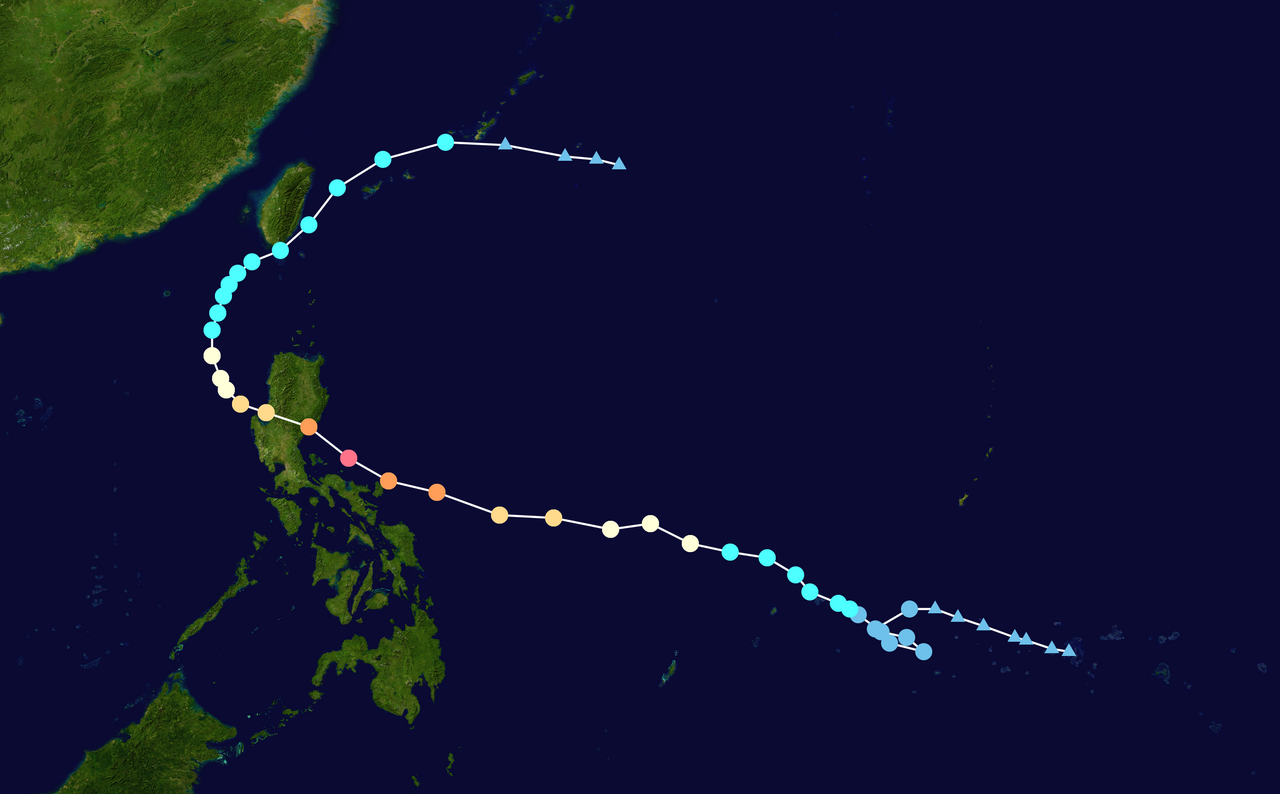
Tropical Cyclone Fung-Wong swept across the northern Philippines, Taiwan, and Japan’s Ryukyu Islands between 4–13 November, bringing destructive winds of up to 185 kph, severe coastal flooding, and multiple landslides. The storm triggered widespread disruption to critical transport infrastructure across all three countries.
In the Philippines, the Manila Multipurpose Terminal (Manila, ~5.5M TEU annually) suspended gate operations and pulled vessels out of port on 9 November, halting container movements and creating a backlog that is still being cleared. Inland, damaged bridges and landslides in Aurora, Ifugao, and Mountain Province slowed cargo evacuation from Luzon, affecting agriculture, food distribution, and domestic manufacturing supply chains.
In Taiwan, several major ports were forced to halt operations. Mailiao Port (Yunlin County), a key energy-import terminal, declared Level 1 typhoon readiness and suspended all inbound/outbound vessel movements from 10–12 November, causing delays to petrochemical and bulk cargo shipments. Kaohsiung Port — Taiwan’s largest port, handling ~9.7M TEU annually — cleared its anchorage and paused bunkering operations from 11–12 November, producing 48–72 hours of vessel congestion and timing distortions in regional rotations. Coastal ferry routes including Keelung–Matsu, Matsu–Fuzhou, and Fugang–Green Island were suspended, cancelling 99 sailings and isolating island communities for several days. These port closures disrupted Taiwan’s electronics and semiconductor export logistics, where schedule precision is critical.
Japan’s Ryukyu ports — including Naha and Ishigaki — experienced temporary anchorage restrictions on 11–12 November, forcing vessels to reroute and creating minor but noticeable delays. Although these ports are smaller (Naha ~300k TEU annually), their disruption affected coastal shipping, fisheries, and inter-island cargo distribution.
At this moment, Fung-Wong has fully dissipated, and all major ports in the Philippines, Taiwan, and Japan have resumed operations. However, post-storm congestion persists: Manila and Kaohsiung are clearing vessel queues, ferry networks in Taiwan are restoring capacity gradually, and inland road damage in the Philippines continues to slow cargo movements. Regional shipping schedules in the Philippine Sea and East China Sea are expected to normalize within 5–10 days as carriers realign rotations and ports work through accumulated delays.
InfraDisruption – InfraEconomy’s recurring insight series examining major transport disruptions and their impact on global logistics networks. Building on these insights, InfraEconomy offers a range of high value-added services from emergency re-routing to long-term contingency strategies. Join our client network.