

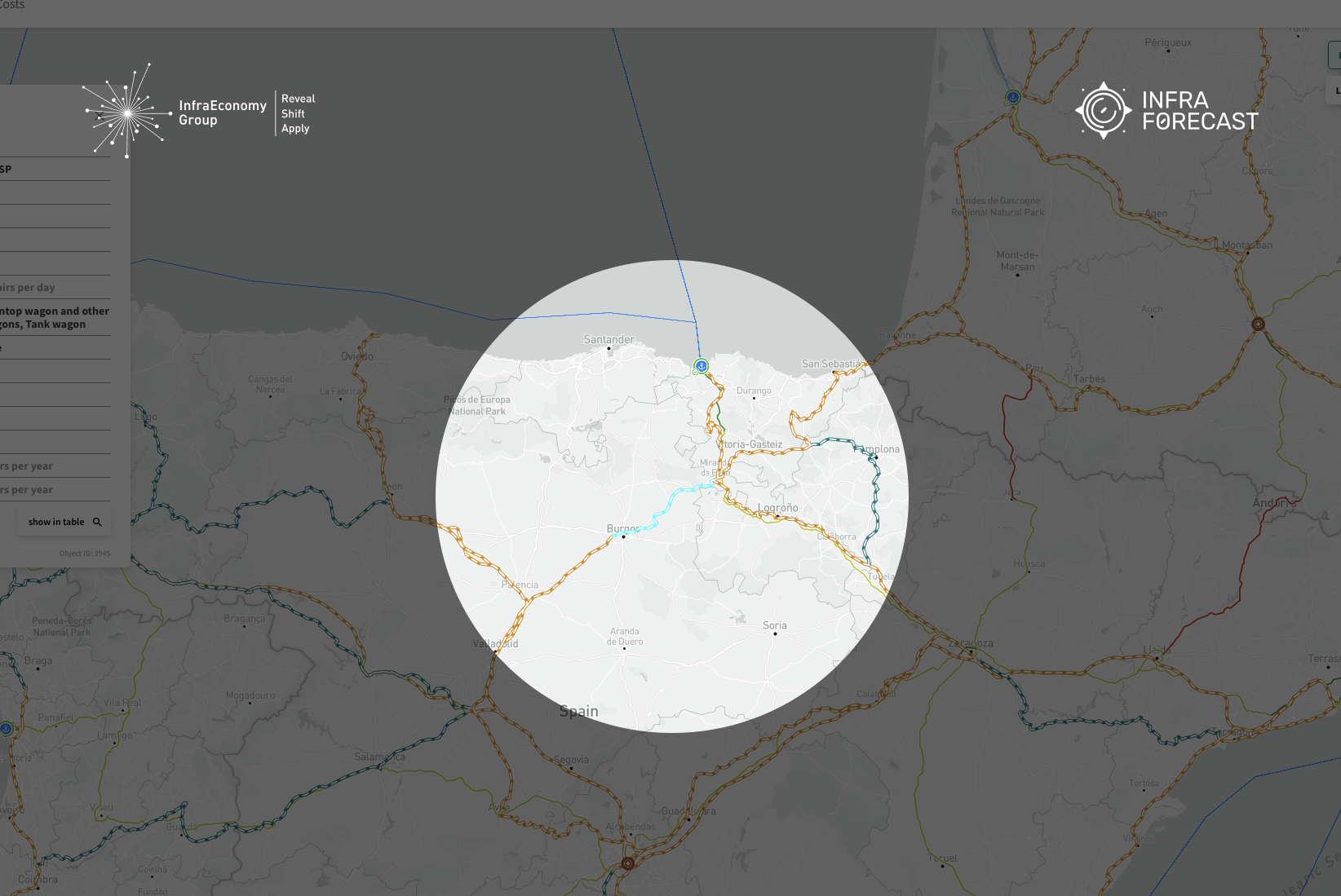

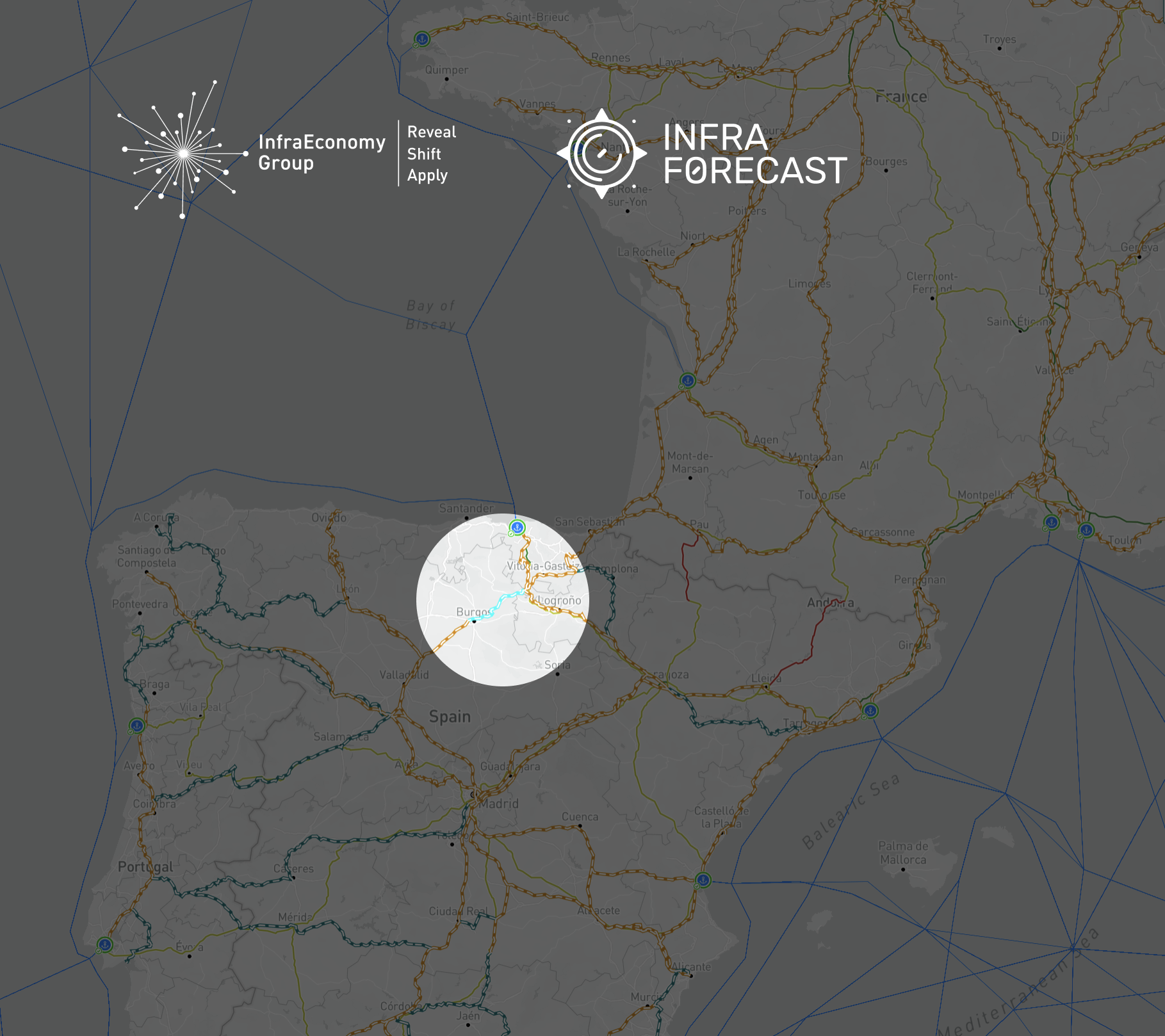
On 20 November 2025, the European Investment Bank approved €1.7 billion in financing to support construction of the Burgos–Vitoria high-speed rail line, a strategic segment of the Atlantic Corridor within the Trans-European Transport Network (TEN-T). The project connects the Madrid–Valladolid–Burgos high-speed line with the Basque Country, where it will integrate into the “Y vasca” network and, from there, provide seamless high-speed rail access to the French border. The financing package also covers the Olmedo bypass, creating a new link between the Madrid–Valladolid and Madrid–Galicia high-speed lines and strengthening long-distance mobility across northern Spain. An initial tranche of €325 million will be signed in the coming days.
This development is highly significant for European transport corridors: the Burgos–Vitoria line will complete one of the most important missing links between the Iberian Peninsula and the rest of the EU, enabling faster, higher-capacity movement across the Atlantic Axis. Together with the “Y vasca,” the corridor is expected to serve 5.5 million passengers annually, relieve pressure on mixed-traffic lines and unlock additional capacity for freight. For trade flows, improved cross-border reliability reduces bottlenecks at the Pyrenees and strengthens Spain–France connectivity—critical for automotive, agri-food and high-value supply chains. From a climate and CO₂ perspective, the project enables modal shift from road to electrified rail, while for investors it reinforces the long-term stability of EU-backed green mobility infrastructure and deepens the high-speed rail backbone of southwestern Europe.
Official Source: EIB
About InfraIndex. InfraIndex highlights the most significant global infrastructure developments, selected for their strategic importance, infrastructure scope, news relevance, and analytical value, and systematically tracked in the InfraMonitor™ database, available exclusively to InfraEconomy Group clients. Join our client network.