

Reframing Mali’s Trade and Logistics Future
Business case: This analysis was developed in 2024 for a major international port and logistics group with a growing footprint in Africa and the Middle East. The objective was to assess Mali’s current and future cargo flows, identify structural bottlenecks in its import and export chains, and evaluate how alternative port, corridor, and rail scenarios could reshape regional trade and long-term demand for port and logistics services.
Trade Under Pressure — and the Upside Potential
Mali’s total exports reached 1.2 million tonnes in 2023, slightly below pre-crisis levels. Political instability, ECOWAS sanctions, and fuel supply disruptions have weighed heavily on trade performance. Yet the analysis shows clear upside: under a stabilization scenario, export volumes could rise to 1.8 million tonnes by 2030, compared to 1.5 million tonnes if adverse trends persist.
Exports have become more globally oriented. While neighboring West African countries remain important buyers, their share has declined sharply over the past decade as shipments to China, Türkiye, Bangladesh, and Southeast Asia have grown. China alone already absorbs around 300 kt, with potential to more than double.
Structural Shifts in Export Flows
The composition of Mali’s exports has changed markedly:
- Iron ore has emerged as the largest export by volume, driven by mining operations supplying China and Türkiye, including an atypical mix of bulk and containerized shipments.
- Cotton exports have expanded, primarily serving South Asian markets.
- Agricultural exports beyond cotton remain volatile but represent a significant growth opportunity if supply chains stabilize.
- Gold, Mali’s most valuable export, continues to move almost entirely by air, with the UAE as the dominant destination.
These shifts place new demands on logistics systems that were designed for more regional, less diversified trade.
Import Dependency and Rising Demand
Mali’s imports — at 8 million tonnes — far exceed exports and are expected to grow regardless of political outcomes, driven by rapid population growth. Fuel, construction materials, grain, and food products dominate inbound flows. The analysis highlights critical vulnerabilities in fuel and grain supply chains and the urgent need for diversified, resilient import corridors to ensure food and energy security.
Ports, Corridors, and Bottlenecks
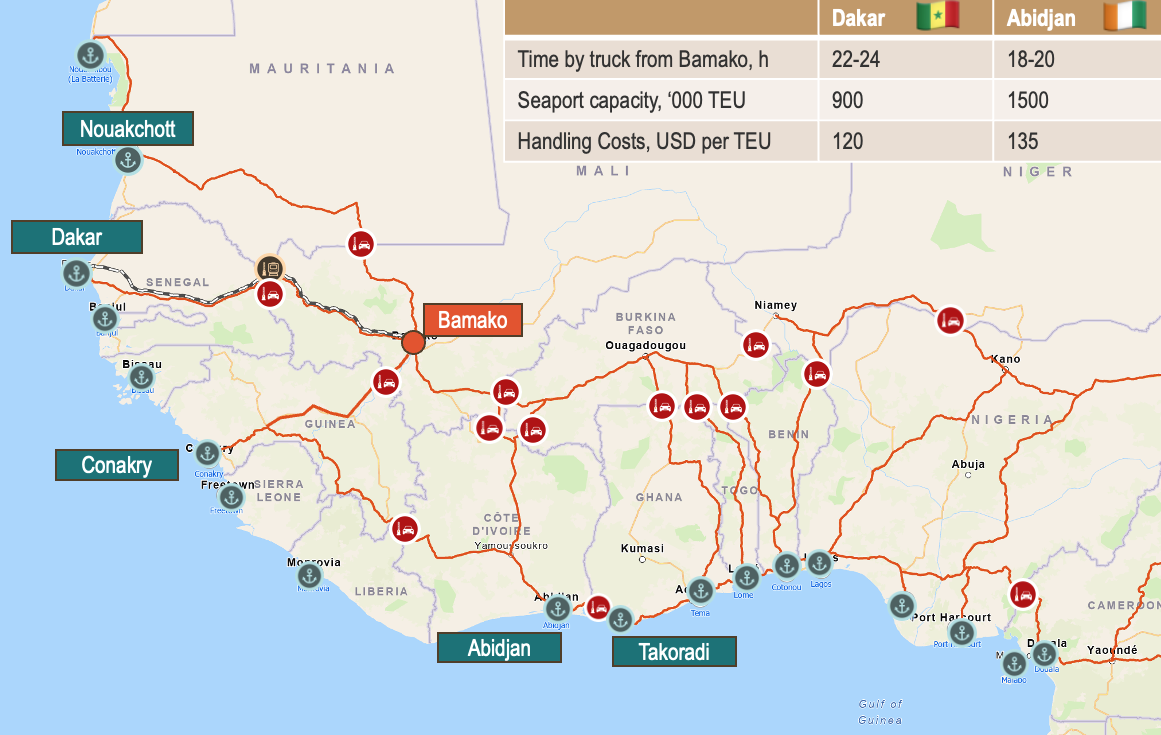
Today, Mali depends primarily on the ports of Dakar and Abidjan, with Abidjan gaining ground due to better road quality and lower transit times. However, capacity constraints, long dwell times, and draft limitations restrict Dakar’s effectiveness, while overreliance on road transport increases costs and risks.
Other regional ports play only a marginal role, underscoring Mali’s structural dependence on a limited number of corridors.
A Transformational Scenario: Rail + New Port
The case models a transformational logistics scenario based on:
- Restoring rail connectivity between Mali and Senegal
- Developing a new deep-sea port south of Dakar
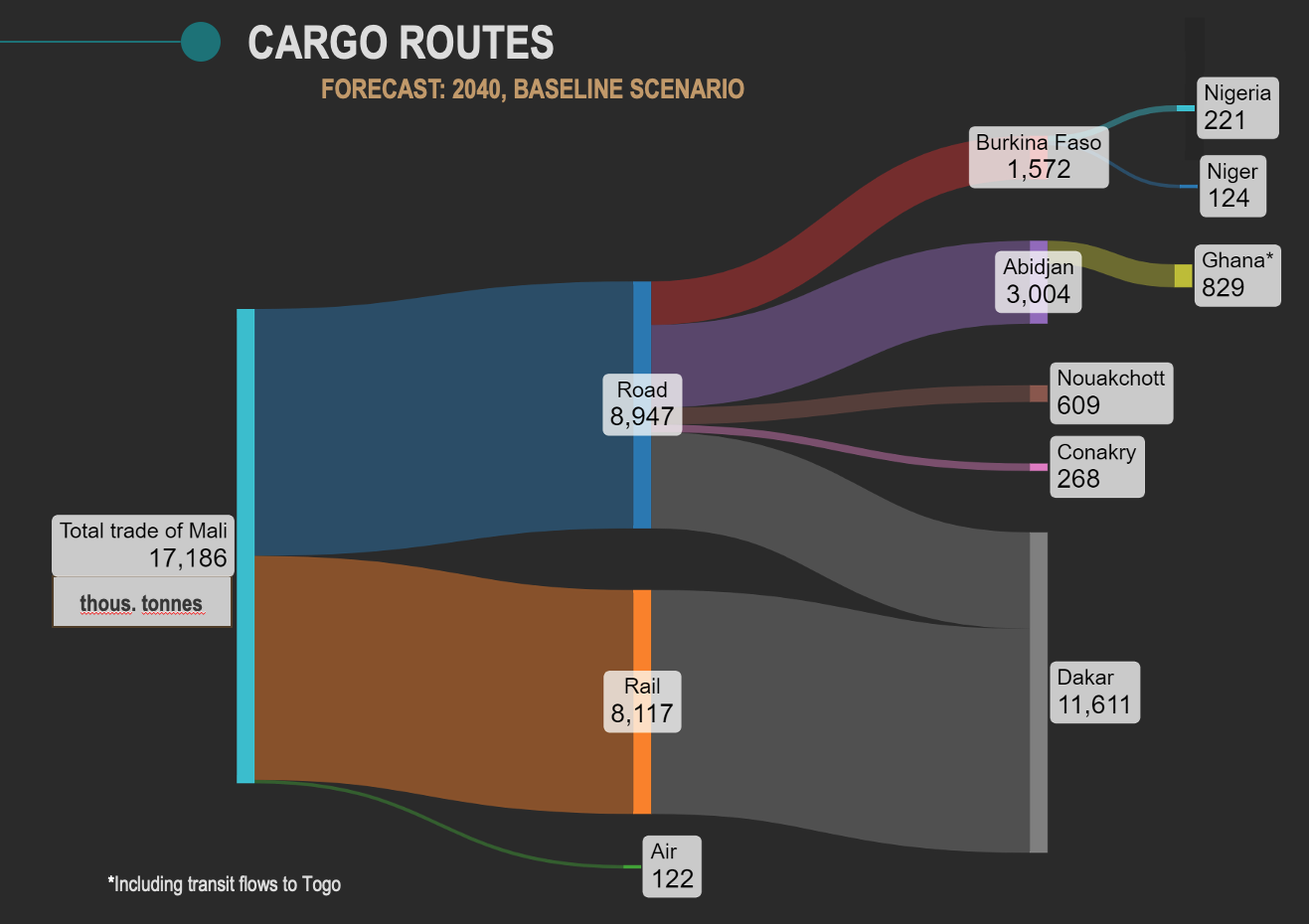
Under this scenario, Dakar would regain a dominant role, handling up to 65% of Mali’s trade, with the majority of cargo shifting from road to rail. Total rail volumes could exceed 8 million tonnes, dramatically improving efficiency, reducing costs, and lowering systemic risk.
The analysis also identifies the potential for dry ports in Bamako, enabling Mali to consolidate cargo flows from neighboring countries and strengthen its role as a regional logistics hub.
This analysis is based on work developed by InfraEconomy for previous clients, addressing real transport and infrastructure challenges across global logistics networks. Building on this experience, InfraEconomy offers a range of high value-added services — from rapid response and re-routing to long-term resilience and contingency strategies. Join our client network.