


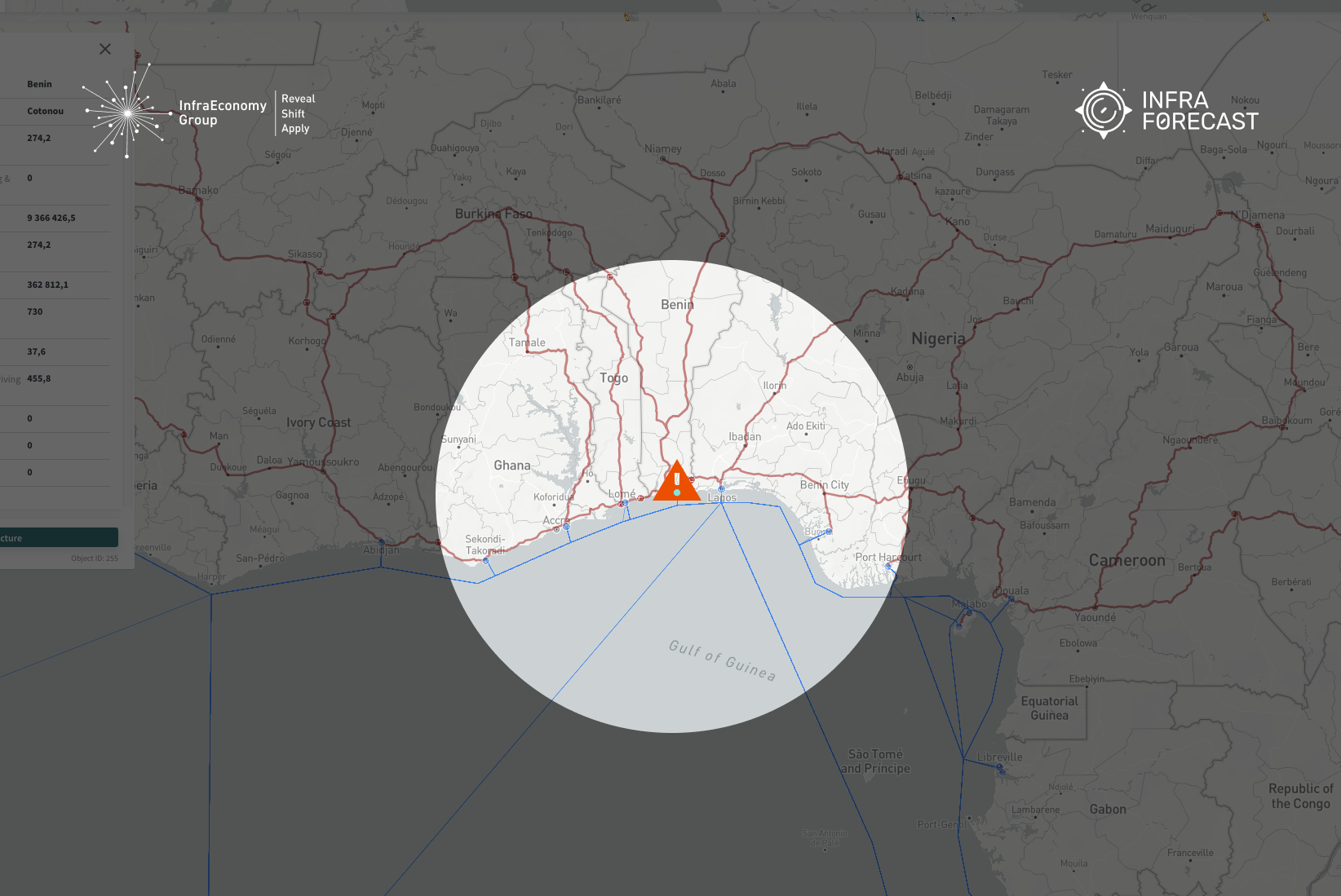
Protests triggered by prolonged power outages disrupted key inland transport corridors in Benin on 22 December 2025, when residents blocked a major highway linking the south of the country with inland and northern regions. The blockade brought human and vehicular movement to a standstill for hours, stranding motorists and freight vehicles on one of Benin’s primary road arteries. Protesters cited weeks of blackout that had crippled local businesses, while electricity providers pointed to generation and fuel constraints rather than deliberate power diversion. The incident occurred against a backdrop of heightened political sensitivity following a failed coup attempt earlier in December, which, while quickly contained, has increased scrutiny of infrastructure resilience and state capacity.
Although the disruption occurred inland, the implications extend well beyond domestic transport. Benin’s trade system relies heavily on road connectivity between inland markets and the Port of Cotonou, the country’s main maritime gateway handling ~1.2–1.3m TEU per year. Cotonou is a critical access point for landlocked Sahelian economies, particularly Niger, Burkina-Faso and even Mali, whose import and export flows depend on stable transit through Benin. Inland transport disruption and power supply instability slow cargo evacuation and truck turnarounds, contributing to backlog accumulation at the port. At the time of writing, congestion at Cotonou is estimated at around seven days, illustrating how domestic energy and transport shocks, when combined with political uncertainty, can quickly cascade into regional trade delays across West Africa.
InfraDisruption – InfraEconomy’s recurring insight series examining major transport disruptions and their impact on global logistics networks. Building on these insights, InfraEconomy offers a range of high value-added services from emergency re-routing to long-term contingency strategies. Join our client network.