


An unannounced increase in fuel prices on 1 January 2026 triggered widespread transport strikes across Algeria, disrupting logistics and supply chains nationwide. The price hike, introduced without prior public debate and alongside a stricter highway code, prompted private transport operators to halt services, paralysing urban and inter-wilaya transport. Participation was reported to be particularly high in major hubs including Algiers, Sétif and Béjaïa, sharply reducing truck availability and slowing the movement of goods.
The disruption quickly propagated to Algeria’s trade and energy infrastructure. Slower inland transport constrained cargo flows toward coastal export nodes, including Skikda, one of the country’s most critical energy hubs. The Port of Skikda, serving LNG, refined petroleum products and bulk cargo, has seen mounting operational pressure. At the time of writing, congestion at Skikda is estimated at around 10 days (other Algerian ports have 3-4 day congestion period), reflecting accumulated delays rather than a port shutdown. Given Skikda’s role in energy exports to Europe, the episode highlights how domestic policy shocks and transport disruption can rapidly translate into international trade and energy-supply risk.
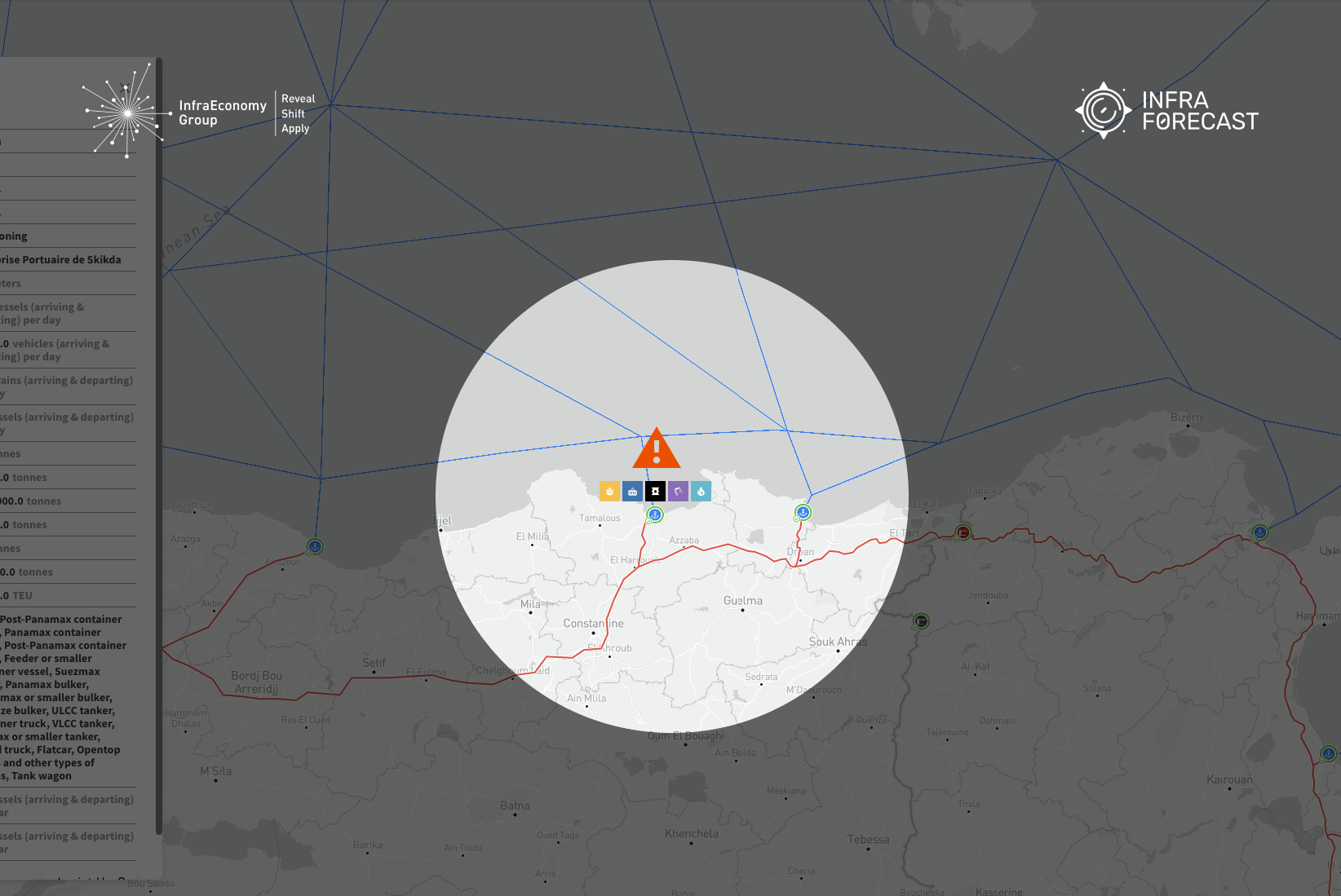
InfraDisruption – InfraEconomy’s recurring insight series examining major transport disruptions and their impact on global logistics networks. Building on these insights, InfraEconomy offers a range of high value-added services from emergency re-routing to long-term contingency strategies. Join our client network.