


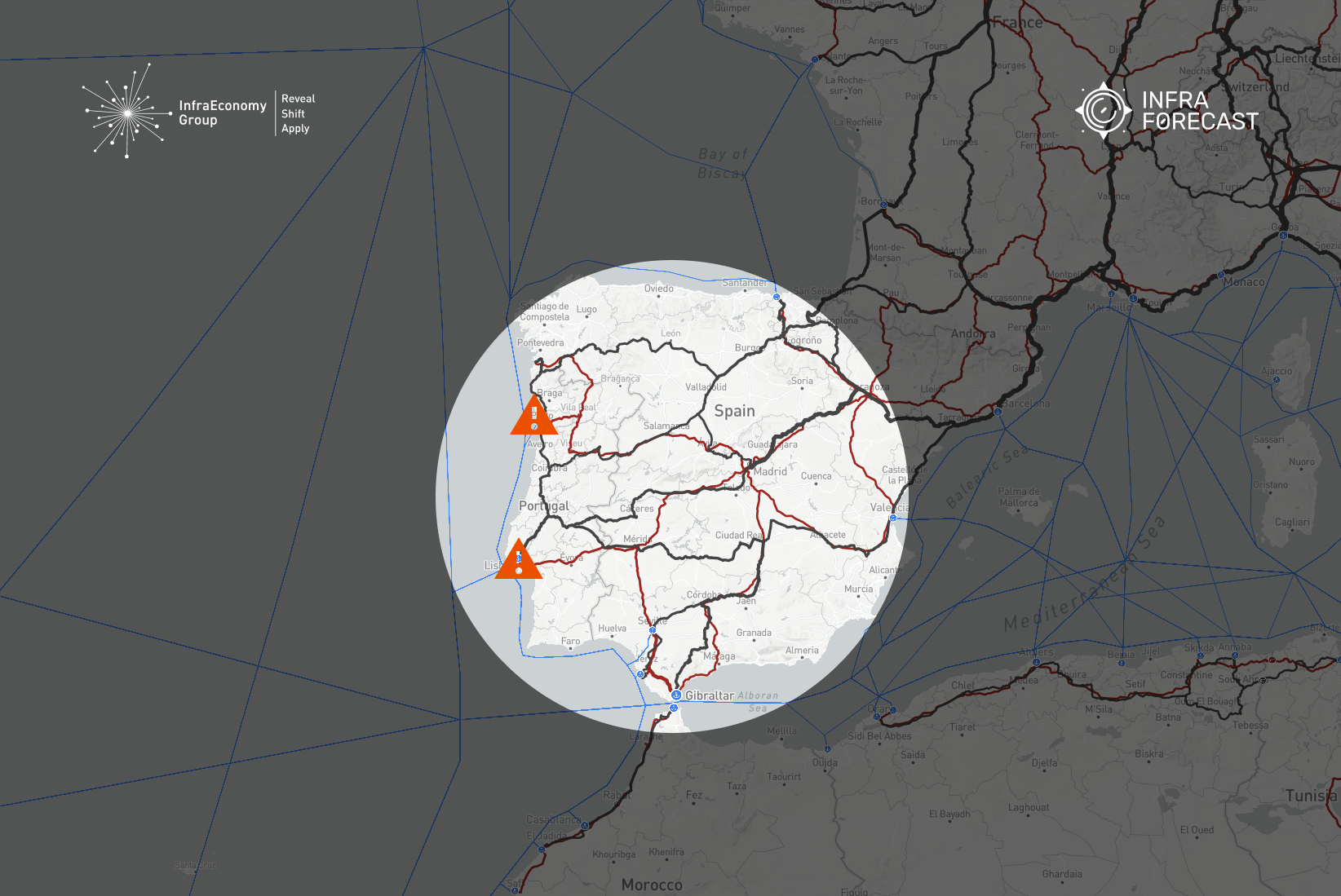
Portugal was largely paralysed on 11 December 2025 during one of the country’s first nationwide general strikes in more than a decade, set against a tense political backdrop ahead of the January 2026 presidential elections. The walkout disrupted rail, urban transport and public services nationwide, sharply reducing workforce availability and mobility across logistics, distribution and support functions. While the strike formally lasted one day, its timing during the year-end peak amplified knock-on effects for freight positioning, crew movements and inland connectivity critical to trade flows.
The disruption exposed the sensitivity of Portugal’s maritime gateways to hinterland shocks. The Port of Lisbon (~600–670k TEU/yr) and Leixões / Porto (~700k TEU/yr) remained operational, but reduced inland access and scheduling frictions constrained cargo evacuation and gate operations. On December 16th, port congestion sources reported operational backlogs at around four days in Lisbon and three days in Porto, reflecting accumulated delays rather than a full port shutdown. Although transport services resumed after the strike, the episode illustrates how short-duration labour action, especially in a politically charged pre-election period, can quickly translate into measurable congestion across Portugal’s trade corridors.
InfraDisruption – InfraEconomy’s recurring insight series examining major transport disruptions and their impact on global logistics networks. Building on these insights, InfraEconomy offers a range of high value-added services from emergency re-routing to long-term contingency strategies. Join our client network.